Collection

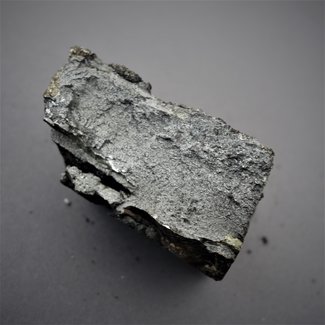
Bloomery iron made from bog iron ore, high phosphorus content

Bloomery iron made from North German bog iron ore with a low carbon and high phosphorus content. For the production of historical "Damascus steel" or for the back or the sides of historical blades, edged weapons and tools.
€116,62

1.2695

A high-alloy, rust-resistant knife steel with a high level of hardness and very good wear resistance.
€47,00

Nickel foil

Nickel foil as a diffusion barrier for carbon in 3-layer blades or as an extremely light layer in decorative damascus steel.
€4,50

22,8 cm Gyuto "Damascus steel"

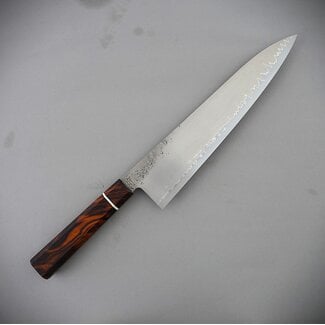
A 22.8 cm Gyuto with a ladder damascus blade made of 1.2419.05 and 1.2767 ESU and a handle made of Cocobolo.
€0,00

1.2003/75Cr1

Very tough, low-alloy tool steel for strong house / work knives and as a gray element in damascus steel.
€11,77

Thermodur Scale-X, 1100 °C (2012 °F)

Protective coating to reduce scaling and decarburization of workpieces during heat treatment.
€32,00

12C27

A stainless knife steel with a balanced combination of corrosion resistance, toughness and high achievable sharpness. Ideal for finely ground blades or robust hunting and work knives.
€19,25

10 pieces - Desert Ironwood premium burl quality - 130x45x30mm

10 pieces - Desert Ironwood premium burl quality - 130x45x30mm
€500,00

24,5 cm Gyuto "MagnaCut"

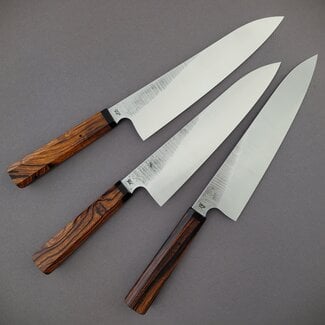
A 24.5 cm light workhorse with a MagnaCut edge, hardened stainless steel sides, and a desert ironwood handle.
€0,00

Light fire bricks 1430 °C (2606 °F )

Light and open-pored light fire bricks with very good insulation effect. E.g. for the construction of combustion chambers of a gas fire.
€4,85

Puddle iron, raw and unforged

Historical iron from the period between 1800 and 1900, made using the puddle process. Raw and unforged.
€36,50

Puddle iron, sorted and forged, 24x34mm

Historic iron from the period between 1800 and 1900, made using the puddle process. Sorted and forged.
€121,87
Veuillez accepter les cookies afin de rendre ce site plus fonctionnel. D'accord? Oui Non En savoir plus sur les témoins (cookies) »